
SignFree
Electronic vs digital signature — and why the seal on the PDF matters
The two terms get mixed up. SignFree uses Simple Electronic Signatures plus a tamper-evident Integrity Seal on the completed PDF — a certificate you can open, a fingerprint that breaks if the file is changed, and an audit trail you can download.
Last checked: September 8, 2026
People search electronic vs digital signature when a client, accountant, or lawyer asks whether “e-sign” is enough. In everyday language the words mean the same thing. In the specs they do not.
An electronic signature is evidence that someone intended to sign — a typed name, a drawn mark, a click, plus a record of who, when, and how. A digital signature in the strict sense is cryptography: a certificate bound to the file so any later change is detectable. SignFree gives you the first for the contract, and the second as an Integrity Seal stamped into the finished PDF — without forcing you into a Qualified Trust Service Provider workflow.
How it works
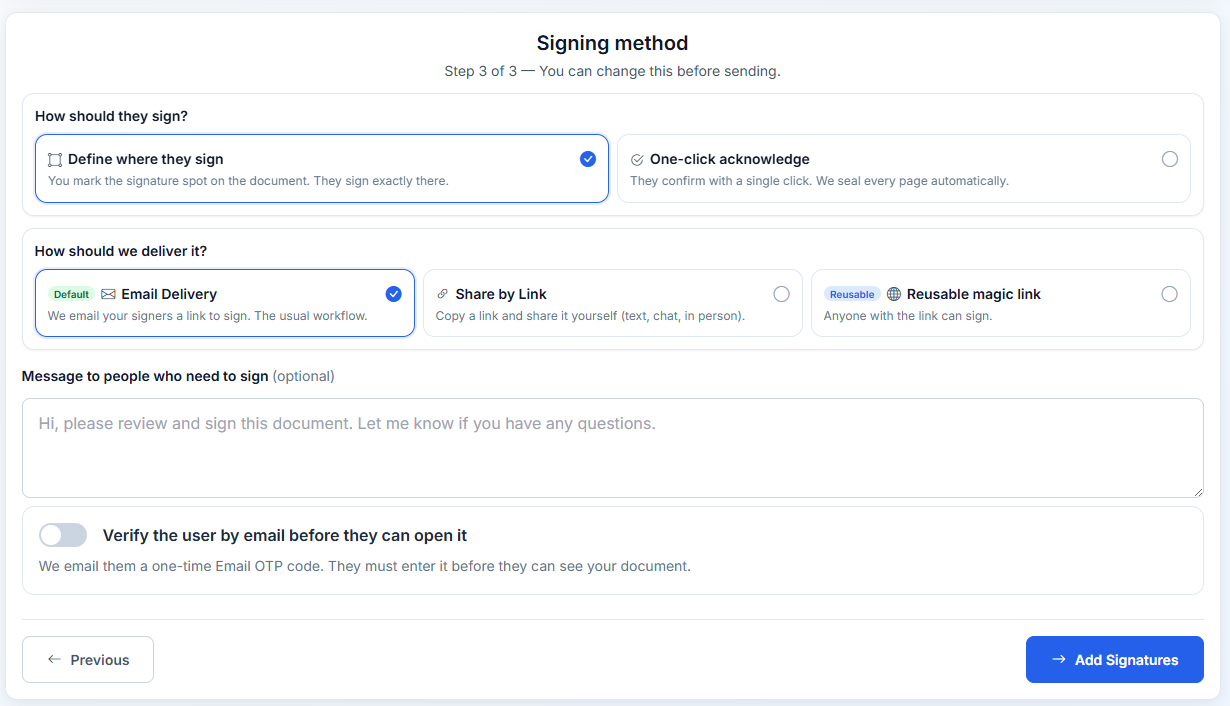
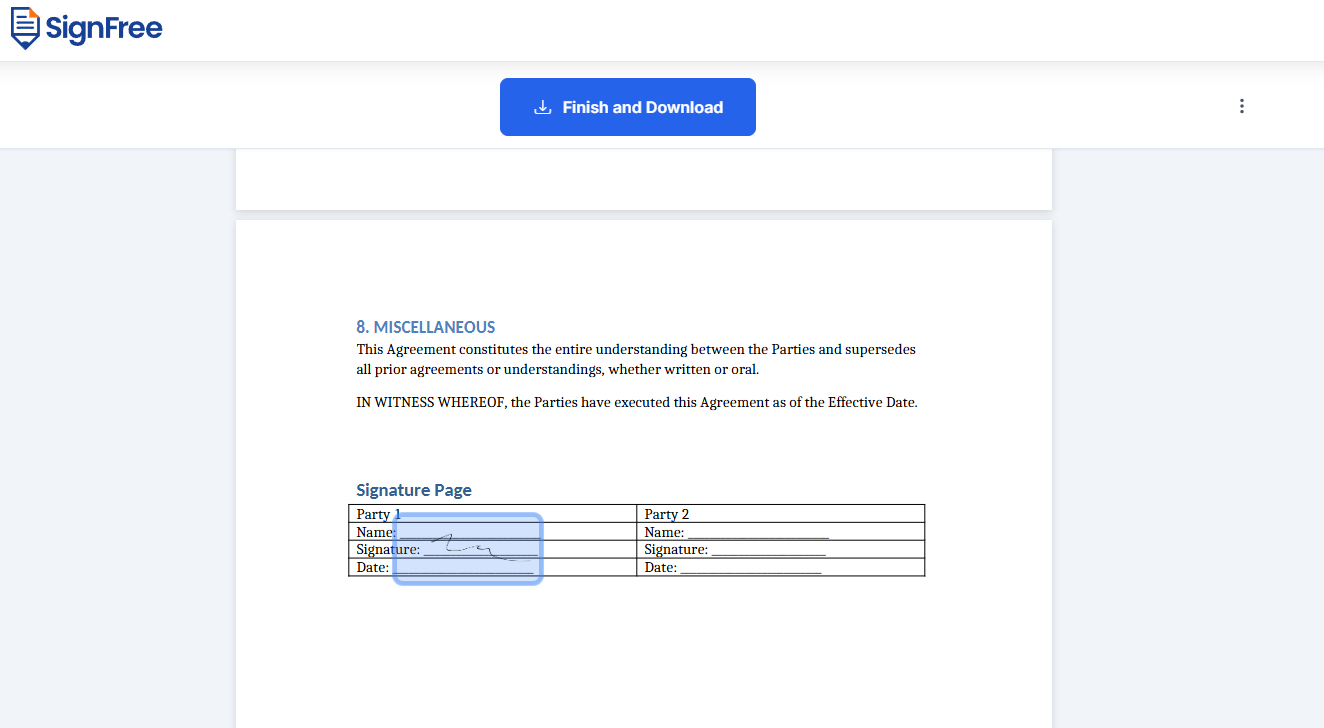
- Upload and send as usual — Word, PDF, or image. Signers confirm with email OTP.
- When the last person signs, SignFree applies the Integrity Seal to the completed PDF.
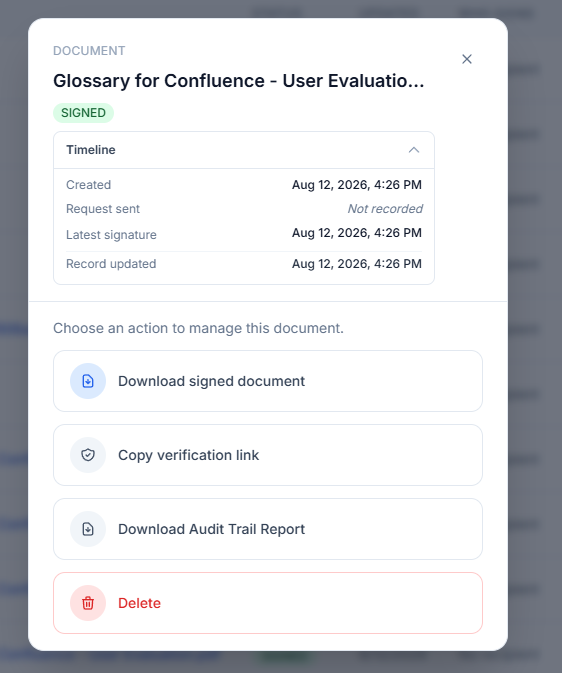
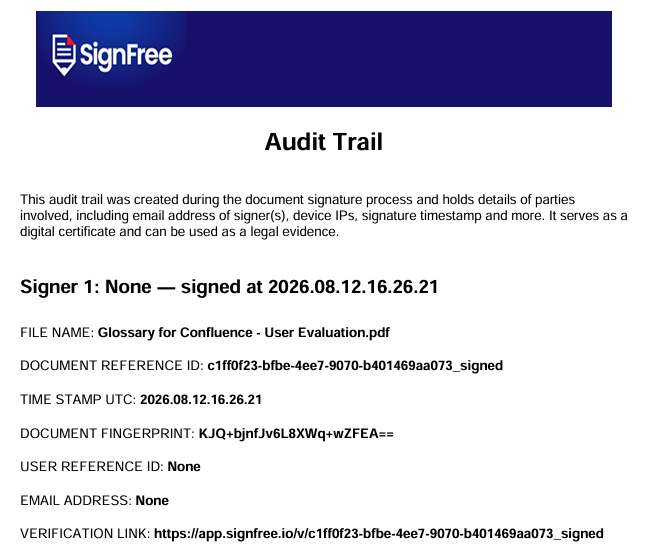
- Download the signed file and the audit trail. Open them to see the certificate, document fingerprint, and verification link.
Electronic signature vs digital signature
Laws that make e-sign work for ordinary business — the ESIGN Act and UETA in the US, the UK Electronic Communications Act, and eIDAS SES in the EU — care about intent and evidence, not which brand of certificate you bought. That is the electronic signature. Most NDAs, proposals, SOWs, and consulting contracts live here.
A digital signature (PKI) goes further: a private key signs a hash of the document, and a certificate lets software prove the file still matches. Adobe’s signature panel, “this document has not been modified,” and Qualified Electronic Signatures (QES) all sit in that world. You need that stack when a statute or a bank demands identity-verified Advanced or Qualified signatures. You do not need it to close a freelance contract the same afternoon.
| What you need | Electronic signature (SES) | Digital signature (AES / QES) |
|---|---|---|
| Intent to sign | Yes — click, draw, or type, with a record | Yes — plus a cryptographic key |
| Evidence pack | Audit trail, timestamps, email OTP | Certificate chain, often government ID |
| Tamper detection | Optional — SignFree includes an Integrity Seal | Built in (hash + certificate) |
| Typical documents | Contracts, NDAs, proposals, offers | Regulated filings, qualified / notarized use |
| Who provides it | Any e-sign tool with a proper record | Often a QTSP or CA-backed identity product |
SignFree is the left column, with a cryptographic seal so the PDF itself carries proof. We do not provide AdES/AES, QES, or government-identity-verified digital signatures.
The Integrity Seal — the certificate on the PDF
After every signer has finished, SignFree locks the final file with a tamper-evident Integrity Seal. It is a self-signed cryptographic certificate embedded in the PDF. Open the signed document (or the audit trail) and you can see:
- Document fingerprint — a hash of that exact file. Change a comma after signing and the fingerprint no longer matches.
- Timestamp — when the record was sealed.
- Verification link — a public URL so anyone can check the document against SignFree’s record, without an account.
- Signer evidence — who signed, how they confirmed (email OTP), and the trail of events.
That picture on the PDF is the point: the proof is not locked inside our dashboard. It travels with the file you download and send to a client, accountant, or counsel.
How the seal supports integrity
Integrity means “this is still the document they signed.” The seal does that in two places:
On the file
The Integrity Seal is a cryptographic fingerprint of the completed PDF. If someone edits the file after execution, the seal no longer validates. That is tamper evidence you can show without a phone call to SignFree.
On the record
The audit trail repeats the fingerprint, document ID, timestamps, and verification link. Copy the verification link from the signed-document panel and share it. Recipients can confirm the file against the original record.
What it is not
The seal does not prove government identity and is not a Qualified Electronic Seal. It is a self-signed lock on the finished document — enough to detect post-signature changes, not a substitute for QES where the law requires a QTSP.
How that supports legal use
Most commercial contracts do not require a qualified digital signature. They require a reliable electronic signature: the person meant to sign, you can show who they were in the process, and the document was not quietly rewritten afterwards. SignFree’s pack is built for that:
- Email OTP (SMS OTP on Pro) so the signer confirms the inbox they control.
- A full audit trail — created, sent, signed, sealed.
- The Integrity Seal on the PDF so integrity is checkable later.
- SES positioning aligned with ESIGN, UETA, eIDAS SES, and UNCITRAL-style laws used in 180+ countries for ordinary B2B paperwork.
Requirements still vary by document type. Real-estate filings, some HR forms, and court or notary work can need extra formality. When in doubt, confirm with counsel. For the work founders actually send — NDAs, proposals, MSAs, offer letters — SES plus a visible seal on the PDF is the simple path.
What you get on Free
- Unlimited documents and signatures
- Templates, reminders, and tracking
- Multi-signer and email OTP
- Audit trail and signer portal
- Pro only for team, SMS OTP, and white-label
Looking for a free DocuSign alternative? See also SignFree vs DocuSign.
FAQ
An electronic signature is evidence of intent to sign (click, draw, type) plus a record. A digital signature in the strict sense is cryptography: a certificate bound to the file. SignFree provides SES and adds an Integrity Seal — a cryptographic certificate on the completed PDF — so you get both intent evidence and tamper detection without a QES product.
After everyone has signed, download the signed document and the audit trail. The record shows the document fingerprint, timestamp, and a verification link. That is the Integrity Seal traveling with the file.
It is tamper-evident: if the completed PDF is altered after sealing, the fingerprint no longer matches and the seal does not validate. It does not prevent someone from creating a new unsigned copy; it proves whether this signed file still matches the sealed original.
No. SignFree provides Simple Electronic Signatures (SES) with a self-signed Integrity Seal. For use cases that legally require AdES/AES or QES, use a Qualified Trust Service Provider.
SES is legally valid for most commercial contracts in 180+ countries when supported by evidence. SignFree keeps email OTP, an audit trail, and the Integrity Seal as that evidence. Some document types need extra formality — confirm with counsel when needed.
Related
Start signing free
Unlimited documents on Free. Pro only when you need team, SMS OTP, or white-label.
Create free account